

Aromatherapy Massage for Skin and Muscle Relief During Dubai’s Seasonal Wind and Dust
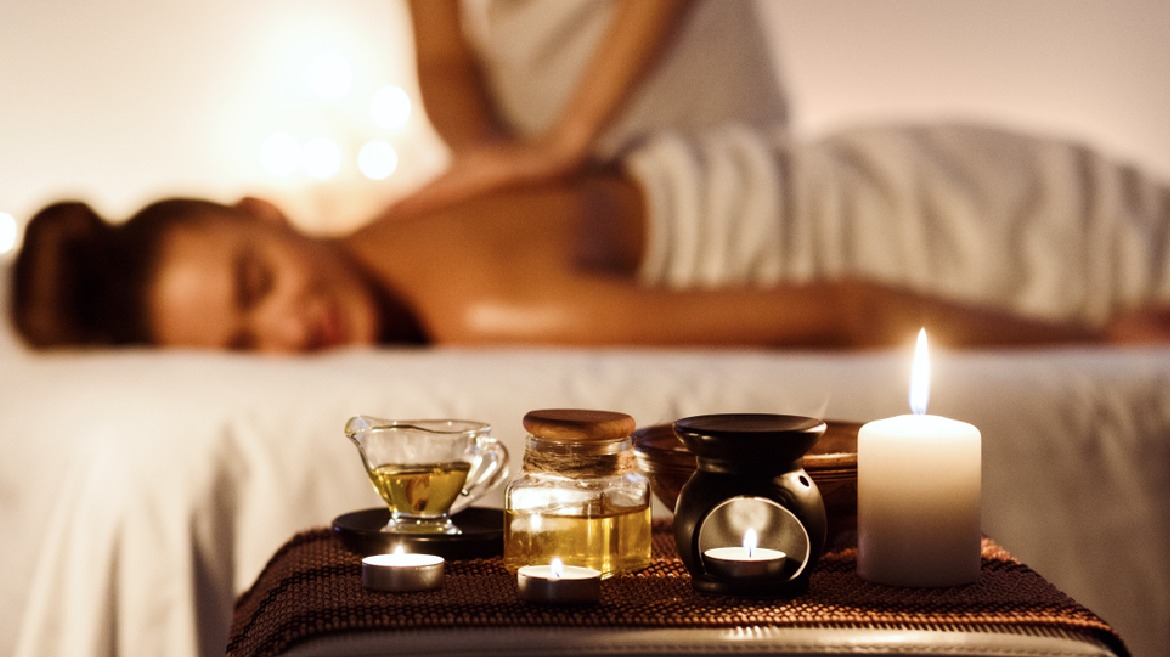
Seasonal desert winds constitute an environmental variable with tangible implications.; they are a measurable stressor that rides on particulate load, low humidity, and abrupt indoor–outdoor temperature swings. In the Gulf, this combination can push the skin barrier into a chronic “recovery mode,” while the body’s musculature quietly shifts toward dehydration-driven stiffness and guarded tone. The modern wellness client does not only want relaxation, they want environmental countermeasures delivered with clinical logic, which is why Aromatherapy Massage in Dubai has increasingly moved from “sensory luxury” to climate-adaptive body care.
Desert Air And The Skin Barrier: A Failure Of Containment
Transepidermal water loss (TEWL) is widely used as an objective marker of barrier integrity, reflecting water vapor flux through the stratum corneum. A systematic review notes that TEWL in normal skin varies under ambient conditions and can increase dramatically when the barrier is damaged, reinforcing its role as a practical indicator of barrier compromise.
PMC
In arid, dust-prone settings, the barrier problem is not simply “dryness”; it is the combination of water loss and lipid disruption, creating a skin surface that becomes more reactive, more permeable, and less predictable.
Airborne particulate matter (PM), including PM2.5, is increasingly implicated in cutaneous oxidative stress and inflammatory pathways. Reviews in environmental toxicology and molecular dermatology link PM exposure to barrier dysfunction and inflammatory skin disease mechanisms, emphasizing oxidative stress and downstream inflammatory signaling as plausible drivers of irritation and flare cycles.
Laboratory work strengthens the biological plausibility: PM2.5 exposure has been shown to induce oxidative stress and cellular damage in keratinocytes, supporting a mechanistic bridge between polluted air and “angry skin.”
In Dubai specifically, particulate exposure is not hypothetical. A study measuring indoor and outdoor PM in residential buildings during the spring dust-storm period highlights how dust events elevate particulate concentrations and infiltrate indoor environments meaning “staying inside” is not always full protection.
Muscle In The Desert: Microcirculation, Dehydration, And Guarded Tone
Muscle discomfort in desert seasons is often framed as posture, workload, or exercise. Those factors matter, but environmental load changes the baseline: low humidity increases insensible water loss, and dust-season living often amplifies time spent in air-conditioned interiors. The result is a body that can feel “tight” even without training load less because of injury, more because of chronic micro-stress and suboptimal tissue hydration.
Massage is frequently discussed as a circulation tool; the evidence is nuanced, but there is credible physiological basis for localized changes in perfusion and tissue oxygenation under certain techniques and conditions. For example, work on massage-related interventions has explored acute improvements in skeletal muscle oxygenation and hemodynamics, suggesting plausible mechanisms through which manual therapy can shift local tissue state, at least temporarily.
Aromatherapy is not a replacement for clinical rehabilitation, yet it can meaningfully shape comfort, pain perception, and treatment adherence especially when paired with skilled touch. A systematic review and meta-analysis reported a statistically significant positive effect of aromatherapy interventions on pain outcomes compared with controls, supporting its use as an adjunct strategy in pain contexts.
For musculoskeletal pain specifically, randomized studies have examined aromatherapy massage applications; one trial investigated Swedish massage with aromatic ginger oil for chronic low back pain in older adults, illustrating that “oil choice” can be treated as an intervention variable rather than decoration.
Why Targeted Oil Blends Behave Differently Than Generic Oils
The desert problem is not solved by “any oil.” Targeted blends work because they are formulated to do three jobs at once:
- Barrier Support: carrier oils that replenish lipids and reduce frictional stress help reinforce the stratum corneum’s containment function critical when TEWL is the enemy variable.
- Oxidative Load Buffering: antioxidant-rich botanicals are positioned as part of a broader strategy against PM-driven oxidative stress and inflammatory signaling.
- Neuromuscular Downshift: aromatic compounds can support parasympathetic bias, which matters because high arousal states sustain muscle guarding and amplify pain interpretation in the nervous system.
This is where the premium segment earns its keep: Luxury Massage Dubai is not only about décor or service choreography; it is about dosing the right sensory chemistry into the right mechanical technique, at the right season, for a body that is already negotiating environmental friction.
Methods And Practical Limits
Clinical studies on TEWL, particulate matter effects on skin biology, and aromatherapy-related pain outcomes. The limitations are clear: findings across PM studies vary by pollutant composition and exposure duration; aromatherapy outcomes depend on methodology, blinding, and comparator choice; and massage-induced perfusion changes may be transient. The practical implication is not a “cure,” but a rational framework: climate-aware oil selection and protocol design can plausibly improve comfort, barrier resilience, and perceived recovery during dust-heavy seasons.
Desert wind and dust are not background; they are active inputs into skin biology and tissue comfort. A formal, climate-adaptive approach to oil blending treats TEWL, particulate oxidative stress, and neuromuscular tone as linked variables, not separate complaints. The edge is simple: when the environment becomes aggressive, wellness must become intelligently defensive, targeted, evidence-aware, and designed for the body that actually lives here.